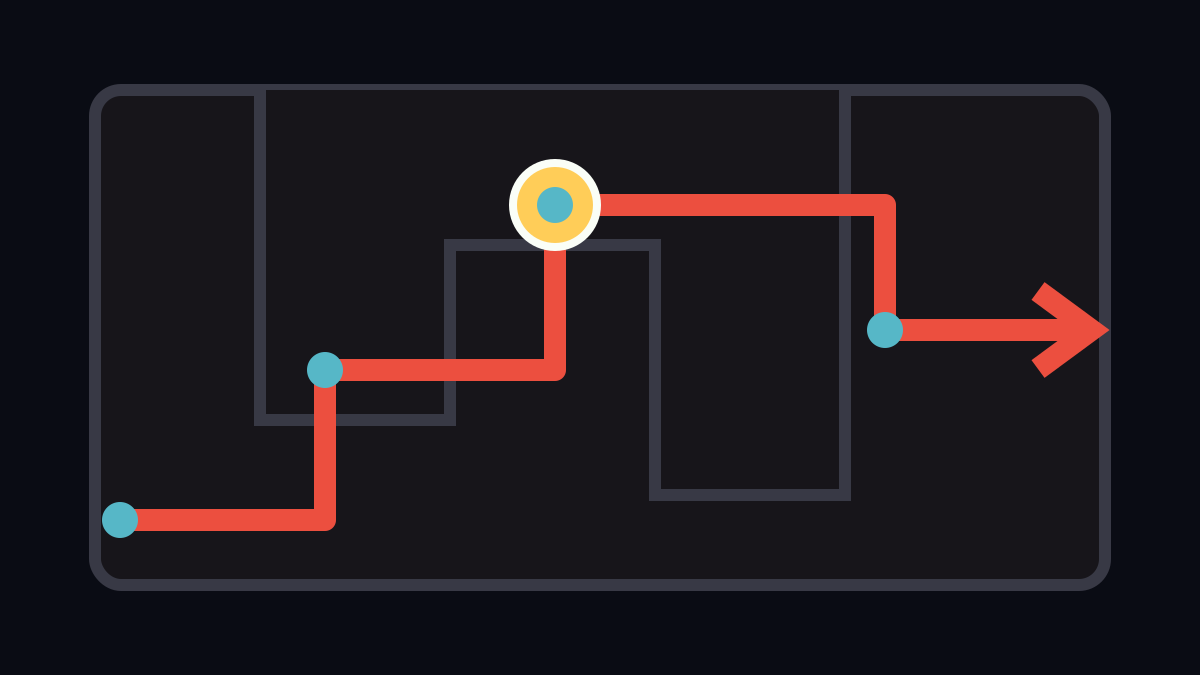
Player field notes
- Gear role
- Destroy defenses and enter bases
- Named gear
- Dual Coil and Void Rod
- Raid objective
- Bring a pet home
- Main tradeoff
- Your own base loses attention
Build a Base and Steal Wiki


Separate confirmed gear from guessed stats
The Roblox experience description confirms the broad role of gear. The current first-party gamepass catalog names a permanent Dual Coil in the unavailable Insane Pack and a for-sale Void Rod described as giving 36x fishing luck. Those names are developer-authored, but the catalog does not expose a full inventory, attack power, range, cooldown or the way each tool interacts with every block.
Use the live tooltip as the authority for current controls and stats. A guide that claims a fixed number of hits without a versioned capture can become wrong after one update.
| Gear reference | Confirmed purpose | Do not assume |
|---|---|---|
| General gear | Can destroy defenses and enable entry | Every tool has the same damage |
| Dual Coil | Named as permanent gear in the Insane Pack | Exact movement or combat effect |
| Void Rod | Official description says 36x fishing luck | Fishing rewards, rates or permanence beyond the pass text |
Pass a four-question raid gate
Do not start with the visible pet. Start with what must remain true for the entire trip. Your own valuable pets need enough protection, the target owner must be accounted for, the chosen breach must connect to the pet route, and the exit must remain shorter than the response you expect. If one answer is missing, scout rather than commit.
Six-player servers are small enough to track individual behavior. Watch who repeatedly raids, who stays home and who has just returned. That observation is more useful than a static 'best time' because the server state changes every minute.
- Home: can your collection survive while your attention is elsewhere?
- Owner: where is the player who controls the target base?
- Breach: does the obstacle you plan to remove reveal a useful route?
- Exit: can you state the retreat path before entering?
Run the raid as checkpoints, not one sprint
A successful first breach does not guarantee a successful steal. Reassess at each transition. The base owner may return, another player may enter the exit lane, or the interior may reveal another layer that makes the target too expensive. Treat abandoning a bad route as a correct decision, not a failed attempt.
Current hands-on coverage confirms that stronger weapons help break blocks and that the escape can turn into a chase. It does not publish a universal route or guaranteed interaction timing. Keep the checkpoints observable and version-proof.
- Secure home
Collect exposed cash and inspect the direct route to your own pets.
- Observe the target
Locate the likely pet position, owner and outside traffic.
- Choose one breach
Use gear only when the opening connects to the planned route.
- Reassess inside
Stop if the route, owner or exit has materially changed.
- Leave on the planned edge
Do not improvise through the slowest interior lane.
- Review both bases
Check what the raid taught you about your own defense.
Compare target value with commitment time
A rare or high-earning pet may justify more effort, but public sources do not provide a complete value table. Use what the current server shows: the pet's displayed information, visible defensive depth, owner position and the number of other players near the route. A lower-value target with a clean exit can be better than a trophy behind several uncertain layers.
The same logic protects your own collection. A prominently displayed pet attracts attention and gives attackers a route preview. If you want to display value, add defensive depth and stay closer to home.
Diagnose the exact stage that failed
Classify a failed raid as preparation, breach, interior, pickup, exit or home-defense failure. This turns a loss into one actionable change. More gear cannot fix a home-defense failure, and a different entry cannot fix an exit blocked by the owner. Keep the diagnosis narrow.
Your offense is also free defensive research. Notice which layer forced you to slow down, which turn hid the pet, and which owner shortcut made interception possible. Recreate the principle at home rather than copying the shape of another base.
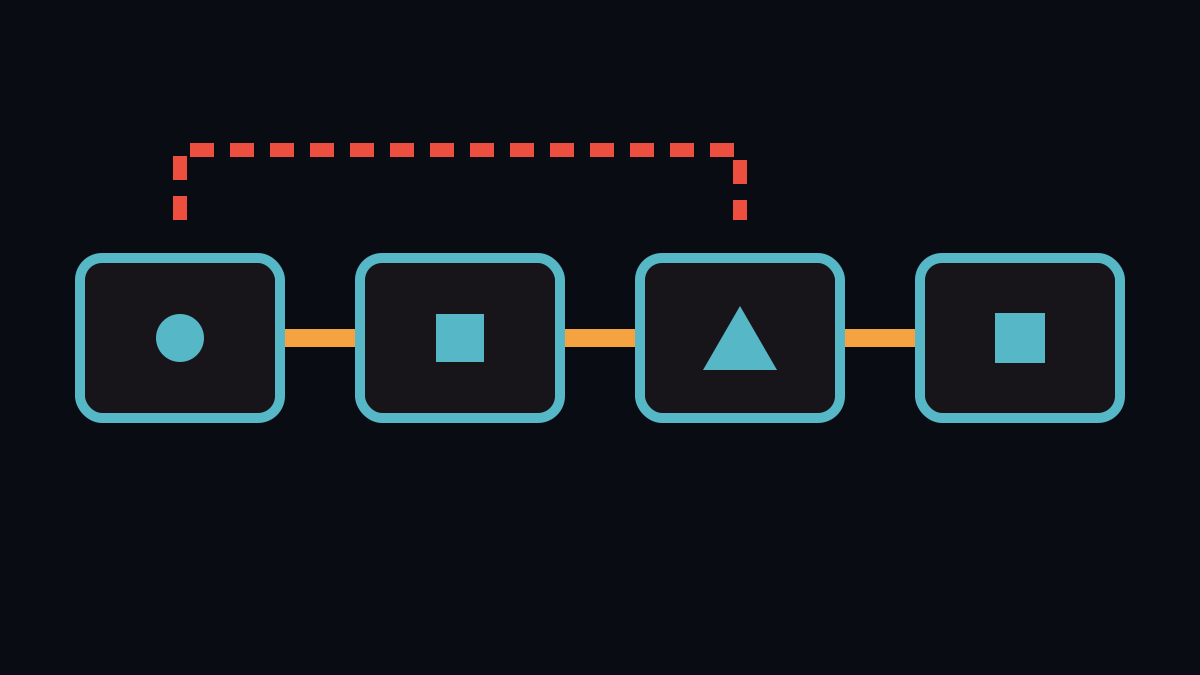
Raid plan
What does gear do in Build a Base and Steal?
The official game description says gear is used to destroy defenses and enter other players' bases. Individual stats should be checked in the current in-game tooltip.
What gear names are confirmed?
The official gamepass catalog names Dual Coil gear and a Void Rod. It does not provide a complete inventory or combat-stat table.
When should I abandon a steal attempt?
Abort when the target owner, route or exit changes enough that the original plan no longer works. A successful breach is not a reason to force a bad interior or escape.